Mastering Sublimation with the 3D Alien Cracked Hole Tumbler Wrap 5 Design
The landscape of custom drinkware has evolved significantly, moving from simple logo placement to immersive, full-coverage artistic experiences. At the forefront of this evolution is the integration of high-resolution digital assets that allow creators to produce professional-grade items without needing advanced illustration skills. A prime example of this technological shift in the crafting industry is the utilization of specialized sublimation files, such as the 3D Alien Cracked Hole Tumbler Wrap 5. This specific design asset represents more than just a graphic; it is a tool that bridges the gap between digital creativity and physical product manufacturing, offering a unique aesthetic that appeals to sci-fi enthusiasts and general consumers alike.
Understanding the mechanics and potential of such a design requires a deep dive into the nature of sublimation printing, the importance of file specifications, and the creative workflows that transform a flat PNG into a three-dimensional visual experience on a curved surface. Whether you are a small business owner looking to expand your inventory, an educator teaching digital design principles, or a hobbyist exploring the world of heat transfer, grasping the nuances of these digital wraps is essential for success.
The Evolution of Tumbler Aesthetics and 3D Illusions
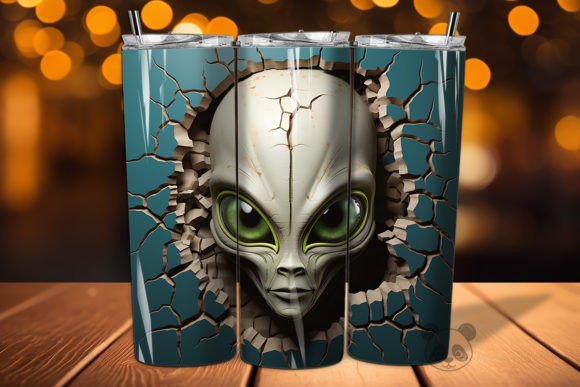
Traditional tumbler designs often relied on repeating patterns or static images that sat plainly on the surface of the steel. However, consumer demand has shifted toward dynamic visuals that offer depth and intrigue. The concept of a "cracked hole" or dimensional breach in the design creates a trompe-l'œil effect, where the viewer perceives a break in the physical reality of the cup. When applied to an Alien seamless pattern or a specific extraterrestrial theme, this effect suggests that the creature is breaking through the surface or peering out from another dimension.
The 3D Alien Cracked Hole Tumbler Wrap 5 leverages this psychological visual trick. By utilizing shadows, highlights, and perspective distortion within the artwork itself, the design mimics the look of a physical tear in the tumbler's coating. This is particularly effective when paired with themes like aliens or space, where the narrative of "breaking through" fits naturally. For creators, using a pre-made asset that already contains these complex lighting calculations saves hours of manual editing in software like Photoshop or Illustrator. It allows the user to focus on the production process rather than the intricate details of rendering light and shadow.
Furthermore, the trend toward Alien watercolor styles mixed with 3D elements offers a unique textural contrast. While the "cracked hole" provides a sharp, realistic edge, the surrounding alien imagery might feature softer, organic brushstrokes. This juxtaposition creates a visually stimulating product that stands out on retail shelves or online marketplaces. The ability to download a file that seamlessly integrates these contrasting styles demonstrates the sophistication of modern digital asset marketplaces.
Technical Specifications and File Integrity
For any sublimation project, the quality of the source file is the single most critical factor determining the final output. When acquiring a digital download like the 3D Alien Cracked Hole Tumbler Wrap 5 Background, understanding the technical metrics is vital. The standard for professional sublimation is a resolution of 300 DPI (dots per inch). This density ensures that when the image is printed onto sublimation paper and transferred to the tumbler, the edges remain crisp, and there is no pixelation or blurring, even upon close inspection.
The dimensions provided in such packages, typically around 9.3 inches by 8.2 inches, are calculated specifically for the 20 oz Skinny Tumbler. This sizing is not arbitrary; it accounts for the circumference of the tumbler and the necessary overlap for a seamless join. A straight tumbler wrap PNG must be precise. If the image is too narrow, gaps will appear; if it is too wide, the design will bunch up, ruining the 3D illusion. The inclusion of a seamless pattern capability means that the edges of the file are designed to align perfectly when wrapped around the cylinder, hiding the seam line effectively.
It is also important to note the file format. PNG (Portable Network Graphics) is the preferred format for these wraps because it supports transparency and lossless compression. Unlike JPEGs, which can introduce artifacts around high-contrast edges (such as the rim of a cracked hole), PNGs maintain the integrity of the design. When users receive the Instant Digital Download PNG, they are getting a file ready for immediate processing in their preferred RIP (Raster Image Processor) software or design suite, ensuring color accuracy and detail retention.
Workflow Integration for Creators and Businesses
Integrating a file like the Alien tumbler wrap into a production workflow involves several distinct steps, each requiring attention to detail. The process begins immediately after the purchase, where the user receives a ZIP file containing the high-resolution asset. Since this is a digital-only product, there are no physical shipping delays, allowing for rapid prototyping and inventory turnover. This immediacy is crucial for businesses reacting to trending topics or seasonal demands.
Once the file is extracted, the creator must prepare it for printing. This involves mirroring the image horizontally. Sublimation printing transfers the ink in reverse; therefore, the design must be flipped before printing to ensure it appears correctly on the tumbler. For a design with specific directional elements, such as an alien facing a certain way or text integrated into the crack, this step is non-negotiable. Failure to mirror the 3D design will result in a backward image, which can be particularly noticeable in asymmetrical compositions like a cracked hole effect.
After printing, the application phase requires precision. The Alien skinny tumbler shape demands that the wrap be aligned carefully to avoid spiraling. Using heat-resistant tape, the sublimation paper is secured tightly against the coated stainless steel. The "skinny" profile of a 20 oz tumbler means there is less margin for error compared to wider tumblers; the paper must adhere smoothly to prevent ghosting or blurred lines caused by paper movement during the heat press cycle. The result, when executed correctly, is a vibrant, durable image that becomes part of the tumbler's surface rather than sitting on top of it.
Versatility Across Different User Groups
The utility of the 3D Alien Cracked Hole Tumbler Wrap 5 extends beyond just one type of user. For professional manufacturers, it serves as a scalable solution. They can produce hundreds of units with consistent quality, relying on the digital file's precision to maintain brand standards. The Alien 3D seamless pattern allows for continuous production runs where the visual identity remains uniform across batches.
For educators and researchers in the field of digital fabrication, these files serve as excellent case studies. They illustrate the relationship between 2D digital art and 3D object mapping. Students can analyze how the curvature of the tumbler affects the perception of the "crack" and learn about the geometric distortions required to make a flat image look three-dimensional on a curved surface. This practical application of geometry and optics makes such assets valuable teaching tools.
Hobbyists and DIY enthusiasts also benefit immensely. Previously, creating a high-quality 3D effect required advanced painting skills or expensive custom commissions. Now, with an Instant Digital Download, a hobbyist can achieve professional results in their home garage. This democratization of design allows individuals to create personalized gifts or start micro-businesses with low overhead costs. The thematic nature of the Alien background also taps into specific niche communities, such as sci-fi conventions or gaming groups, allowing creators to target very specific audiences with relevant merchandise.
Considerations for Optimal Results
While the digital file provides the blueprint, the final outcome depends heavily on the physical materials used. Not all tumblers are created equal. To achieve the vivid colors and deep blacks seen in the Alien png preview, the tumbler must have a high-quality polyester coating designed specifically for sublimation. Cheap coatings may result in dull colors or poor adhesion, diminishing the impact of the 3D effect. Additionally, the heat press settings—temperature, time, and pressure—must be calibrated to the specific manufacturer of the blank tumbler.
Color management is another critical consideration. Monitors display colors in RGB (Red, Green, Blue), while printers use CMYK (Cyan, Magenta, Yellow, Key/Black) or specialized sublimation ink sets. There is often a discrepancy between what is seen on the screen and what is printed. Professionals should utilize ICC profiles specific to their printer and ink combination to ensure the greens of the alien and the darks of the cracked hole match the original 3D background intent. Without proper color profiling, the eerie atmosphere of the design could be lost to washed-out tones.
Moreover, the orientation of the design on the tumbler matters. When applying the Straight Tumbler Wrap PNG, the creator must decide where the seam will fall. In a design featuring a focal point like a cracked hole, placing the seam directly over the main subject can disrupt the visual flow. Strategic placement ensures that the seam lands in a less critical area of the pattern, maintaining the illusion of continuity. This requires a bit of foresight during the wrapping stage, highlighting the importance of understanding the physical dimensions of the product alongside the digital asset.
The Broader Impact of Digital Assets on Manufacturing
The availability of specialized files like the 3D Alien Cracked Hole Tumbler Wrap 5 signifies a broader shift in the manufacturing sector towards on-demand production. The traditional model of holding large inventories of pre-printed goods is being replaced by a agile model where digital files are stored and only printed when an order is placed. This reduces waste and financial risk for business owners. The ability to instantly swap designs—from an alien theme to a floral pattern—allows businesses to test markets rapidly without committing to large print runs.
This model also encourages innovation in design. Because the barrier to entry for creating complex 3D effects is lowered, designers are experimenting with more ambitious concepts. We are seeing a rise in hyper-realistic textures, optical illusions, and interactive-looking graphics on everyday objects. The Alien seamless pattern is just one iteration in a growing library of sophisticated digital wraps that challenge the boundaries of what can be achieved with heat transfer technology.
In conclusion, the intersection of high-fidelity digital art and sublimation technology offers immense potential for creators across various sectors. By leveraging assets like the 3D Alien Cracked Hole Tumbler Wrap 5, users can produce stunning, professional-grade products that captivate audiences. Success in this arena relies not just on the quality of the download, but on the user's understanding of the entire ecosystem—from file resolution and color management to the physics of heat pressing. As the technology continues to advance, the line between digital imagination and physical reality will continue to blur, offering endless possibilities for customization and expression.