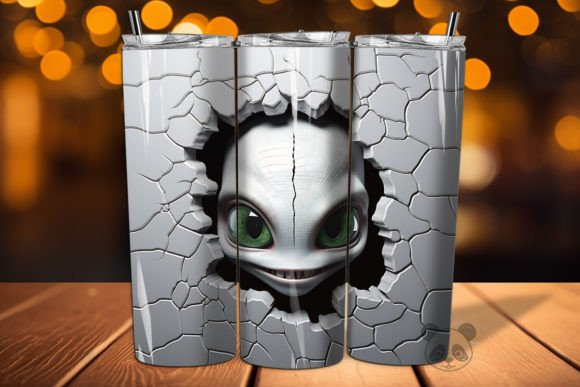
Integrating the 3D Alien Cracked Hole Tumbler Wrap 18 into Your Sublimation Workflow
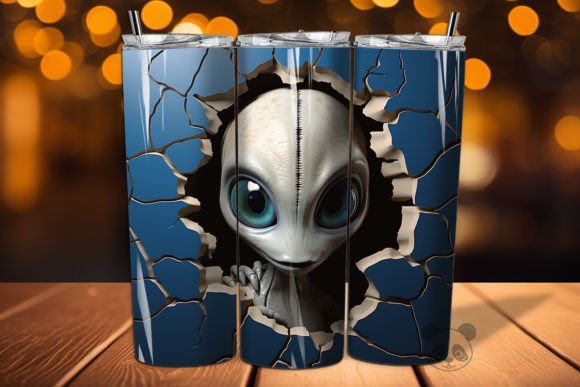
In the competitive landscape of custom drinkware production, the difference between a standard product and a bestseller often lies in the quality and uniqueness of the design asset. For sublimation professionals, hobbyists, and small business owners, sourcing high-resolution graphics that stand out is a critical step in the manufacturing process. The 3D Alien Cracked Hole Tumbler Wrap 18 represents a specific type of digital asset designed to streamline this phase. It is not merely an image; it is a pre-engineered component intended to fit precisely within the constraints of a 20 oz skinny tumbler, reducing the time spent on layout adjustments and allowing the creator to focus on production efficiency and quality control.
Understanding where this digital file fits into a broader creative and business workflow is essential for maximizing its value. Whether you are a freelancer managing multiple client orders or an entrepreneur building a catalog of ready-to-ship items, integrating a specialized wrap like this requires a strategic approach to file management, printer calibration, and press operation. This guide explores how to effectively utilize the 3D Alien Cracked Hole Tumbler Wrap 18, from the moment of download to the final peeled product, ensuring consistency and professional results.
Asset Acquisition and Digital Preparation
The workflow begins before the printer ever warms up. When you purchase an instant digital download such as the 3D Alien Cracked Hole Tumbler Wrap 18 Background, you are acquiring a specific set of data optimized for sublimation. The file typically arrives in a ZIP archive containing a high-resolution PNG. In this specific case, the dimensions are approximately 9.3 inches by 8.2 inches at 300 DPI. These metrics are not arbitrary; they are calculated to cover the surface area of a straight 20 oz skinny tumbler with minimal waste and proper overlap.
Upon extracting the file, the first step in your process should be verification. Open the PNG in your preferred design software, such as Adobe Photoshop, Illustrator, or even free alternatives like GIMP or Canva. Check the resolution settings to ensure the software recognizes the 300 DPI standard. Printing a 300 DPI image at a lower resolution setting in your driver can result in pixelation, which destroys the illusion of the "3D" depth and the intricate details of the cracked hole effect. Conversely, upscaling a lower resolution image will not yield better results.
Organization is key at this stage. If you manage a library of designs, categorize this asset under relevant tags such as "Alien," "Sci-Fi," "3D Pattern," or "Skinny Tumbler." This ensures that when a client requests a space-themed item or when you are planning a seasonal collection, the file is immediately accessible. Proper metadata tagging and folder structures prevent bottlenecks during busy production periods.
Printer Calibration and Color Management
The visual impact of the Alien watercolor textures and the depth of the 3D design rely heavily on accurate color reproduction. Sublimation is a transformative process where ink turns into gas and bonds with polymer coatings. The colors you see on your monitor (RGB) will differ from the printed output (CMYK via sublimation ink). Therefore, integrating this wrap into your workflow necessitates a robust color management strategy.
Before committing to a full production run, always print a test strip. The dark tones in the "cracked hole" areas and the vibrant hues of the alien elements require precise ink saturation. If your printer profile is not calibrated, shadows may become muddy, losing the definition of the crack, while highlights might appear washed out. Use a color chart specific to your sublimation paper and ink brand to create or select the correct ICC profile. This step ensures that the Alien seamless pattern retains its intended contrast and vibrancy.
Paper selection also plays a role in the outcome. High-tack sublimation paper is often recommended for cylindrical objects to prevent ghosting caused by paper movement during the press cycle. Given the intricate details of the 3D alien motif, any shift in the paper can blur the edges of the cracks, compromising the 3D effect. Ensure your paper is compatible with your ink set and cut slightly larger than the 9.3 x 8.2 inch design to allow for secure taping without encroaching on the image area.
The Pressing Process: Temperature, Time, and Pressure
Once the design is printed and trimmed, the physical application phase begins. This is where the theoretical preparation meets practical execution. For a 20 oz skinny tumbler, the heating element must wrap evenly around the cylinder. The 3D Alien Cracked Hole Tumbler Wrap 18 is designed as a straight wrap, meaning it assumes a uniform diameter along the pressing area. If your tumbler has a slight taper, you may need to adjust the stretching of the transfer paper slightly to avoid distortion at the top or bottom edges.
Standard sublimation parameters for skinny tumblers usually range between 360°F to 400°F for 5 to 7 minutes, but these variables depend entirely on your specific heat press model and convection oven capabilities. Because this design features a complex background with varying densities of ink, consistent pressure is vital. Uneven pressure can lead to light spots where the ink fails to sublimate fully, particularly in the darker regions of the alien background. Using a shrink wrap or silicone band over the sublimation paper helps maintain tight contact between the paper and the tumbler coating throughout the heating cycle.
Timing is another critical factor. Under-pressing results in dull colors and poor durability, while over-pressing can cause the colors to brown or the coating to degrade. When working with a new design like the Alien 3D seamless pattern, document your time and temperature settings for that specific batch of blanks. This creates a repeatable process, ensuring that every unit produced matches the quality of the first.
Quality Control and Post-Press Handling
After the heating cycle completes, the cooling phase is just as important as the heating phase. Do not remove the paper immediately. Allow the tumbler to cool slightly until it is safe to handle but still warm. Peeling the paper too hot can sometimes cause smudging if residual ink hasn't fully set, while peeling too cold might make the paper adhere stubbornly. The reveal is the moment of truth for your quality control process.
Inspect the finished product for common defects: ghosting (double images), streaks, or white spots. The Alien tumbler wrap design, with its detailed cracks and watercolor textures, will clearly show any imperfections in the transfer. A successful transfer will show sharp lines in the cracks and smooth gradients in the watercolor sections. If the 3D effect looks flat, review your contrast settings in the pre-print stage or check your press pressure.
For business owners, this stage also involves packaging considerations. Since the product is now a finished good, protect the surface from scratches during shipping. The durability of sublimation is high, but abrasive contact with other hard objects can mar the finish. Including care instructions for the end-user adds value and reduces the likelihood of returns due to user error, such as washing in a dishwasher with harsh detergents.
Scaling Production and Business Integration
Integrating the 3D Alien Cracked Hole Tumbler Wrap 18 into your inventory is more than a one-off project; it is an opportunity to expand your product line efficiently. Because the file is a digital download, you have the flexibility to produce on demand. This aligns well with lean manufacturing principles, reducing the need for large upfront inventory costs. You can list the item in your online store as a made-to-order product, triggering the printing process only when a sale is confirmed.
Furthermore, this asset can serve as a base for customization. While the design is complete as is, skilled designers might use the PNG layers (if available or recreated) to add personalized text, names, or logos for clients seeking bespoke items. The neutral yet striking nature of the alien theme makes it versatile for various demographics, from sci-fi enthusiasts to gamers. By understanding the workflow surrounding this specific wrap, you can offer faster turnaround times and higher consistency than competitors who are still manually sizing and adjusting generic images.
In conclusion, the value of the 3D Alien Cracked Hole Tumbler Wrap 18 extends beyond the aesthetic appeal of the image itself. It lies in how seamlessly it integrates into a professional sublimation workflow. From the initial download and file verification to the precise calibration of printers and presses, every step contributes to the final quality of the product. By treating the digital file as a crucial component of a larger operational system, creators and businesses can ensure efficiency, maintain high standards, and deliver products that resonate with their target audience. The key to success is not just having the design, but mastering the process that brings it to life on the physical substrate.